Bear with me.
My mother has this bizarre tradition of parking as far from the entrance to any Wal-Mart superstore, especially if it's in town (Anderson, SC), because she says, "We've got properly functioning legs for which we ought to be thankful. We don't walk enough. So let's walk." The day Adam Sutton first spoke to me, I resigned to remain in the car; it had been a particularly trying day at community college and, for reasons beyond me, I needed time to myself.
I've no idea what the hell I was thinking about. Truly I do not. I will say this must have been around the time I physically attached myself to several disreputable, disgusting guys who wanted one thing and one thing only. Recalling heavily how that felt, I can say I was most likely ruminating on that time and those actions in my life when Adam Sutton first spoke to me.
Here's where it began: Adam and his father, an Adventist pastor/chaplain/clergy-of-some-sort, walk into Wal-Mart. There Adam sees a beautiful boy his age he's never seen before with raven-black hair and eyes, a pale complexion, a Crest smile. When he speaks, his deep voice vibrates inside your chest as if you'd spoken instead of him. His name is Terry, short for Terian.

From the outset I loved these boys. I loved that they loved each other. Initially, I thought, "I'm writing a romance about two boys who fall in love. Cool." Little did I know. A swarm of influences would, within nine months or so, invade my life and alter my perception of myself and others like me in ways I couldn't possibly reverse.
The seminal works of David Levithan, the author responsible for my coming out:
Boy Meets Boy (2003),
The Realm of Possibility (2004),
Love is the Higher Law (2009), and the co-written
Will Grayson, Will Grayson (2009). John Green's life-saving (literally: this book entirely reversed my suicidal mindset) debut
Looking for Alaska (2005).
What They Always Tell Us (2008) by Martin Wilson, the single-most important standalone novel I've read starring a gay character. Nick Burd's superb
The Vast Fields of Ordinary (2009), which showed me, while my own excursions into sex had been disastrous, it could have always been far worse.
Dream Boy (1995) by Jim Grimsley showed me I didn't have to write a traditional, feel-good romance; the darkness I felt could be expressed without utter shame or contempt for one's sexuality being part of that darkness.

These books I read within two months' time. It would take two years before I felt comfortable enough to 1) come out, coinciding with 2) writing Adam Sutton's story in full. Four drafts later, entirely different influences have surfaced. Both of Bill Konigsberg's books:
Openly Straight (2013) and
Out of the Pocket (2008). The many interviews of author Toni Morrison, whose words on race, black characters in literature, the wonky term "African-American literature", etc.
This Creative Life, a podcast conducted by one of my all-time favorite authors, Sara Zarr (whose 2013 novel
The Lucy Variations destroyed me in the best possible way; I totally fanboy-emailed her AND SHE RESPONDED IN KIND). Plus a slew of "dark" contemporary young adult novels a la Andrew Smith (
Ghost Medicine;
In the Path of Falling Objects;
The Marbury Lens;
Stick), Steve Brezenoff (
Brooklyn, Burning), A.S. King (
Everybody Sees the Ants, Please Ignore Vera Dietz), Craig Thompson's
Blankets, Hannah Moskowitz's
Gone, Gone, Gone, and Stephen Chbosky's
Perks of Being a Wallflower. And a plethora of others...
So...
Adam Sutton went from a blond-haired, blue-eyed pastor's kid in a romance novel to the dread-headed, hazel-eyed son of a private school chaplain who cheats on his boyfriend, falls shamefully in love with his best friend (who reciprocates), all the while desperately seeking to avoid the school scandal involving a freshman boy physically assaulted for the suspicion he's gay because he's a ballet dancer and so are his two moms. The book Adam Sutton needed his story to be could never have been without all these insane, somewhat sporadic influences.
Just looking at this all, I cannot help but wonder why the hell I've tried writing anything else these past four years. Clearly, Adam Sutton's where the gold's at.


 From the outset I loved these boys. I loved that they loved each other. Initially, I thought, "I'm writing a romance about two boys who fall in love. Cool." Little did I know. A swarm of influences would, within nine months or so, invade my life and alter my perception of myself and others like me in ways I couldn't possibly reverse.
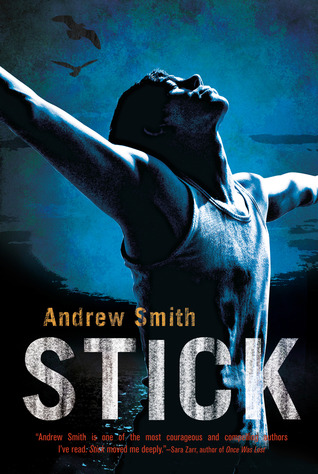 These books I read within two months' time. It would take two years before I felt comfortable enough to 1) come out, coinciding with 2) writing Adam Sutton's story in full. Four drafts later, entirely different influences have surfaced. Both of Bill Konigsberg's books: Openly Straight (2013) and Out of the Pocket (2008). The many interviews of author Toni Morrison, whose words on race, black characters in literature, the wonky term "African-American literature", etc. This Creative Life, a podcast conducted by one of my all-time favorite authors, Sara Zarr (whose 2013 novel The Lucy Variations destroyed me in the best possible way; I totally fanboy-emailed her AND SHE RESPONDED IN KIND). Plus a slew of "dark" contemporary young adult novels a la Andrew Smith (Ghost Medicine; In the Path of Falling Objects; The Marbury Lens; Stick), Steve Brezenoff (Brooklyn, Burning), A.S. King (Everybody Sees the Ants, Please Ignore Vera Dietz), Craig Thompson's Blankets, Hannah Moskowitz's Gone, Gone, Gone, and Stephen Chbosky's Perks of Being a Wallflower. And a plethora of others...
